Tag Archives: Heatstroke

Hot Dogs research on BBC Radio London

Hot Dogs research team member Dr Dan O’Neill recently joined Jo Good and Anna Webb on “Barking at the Moon” on BBC Radio London to talk all things “Hot Dogs”.

In this 10 minute recording Dan outlines:

  • The dogs at increased risk of heatstroke
  • What triggers heatstroke in dogs
  • How to use human heat-health alerts to identify high risk periods
  • How to cool a dog with heatstroke/overheating
  • How to prevent heatstroke

You can listen to the recording (with accompanying slides and references) here:

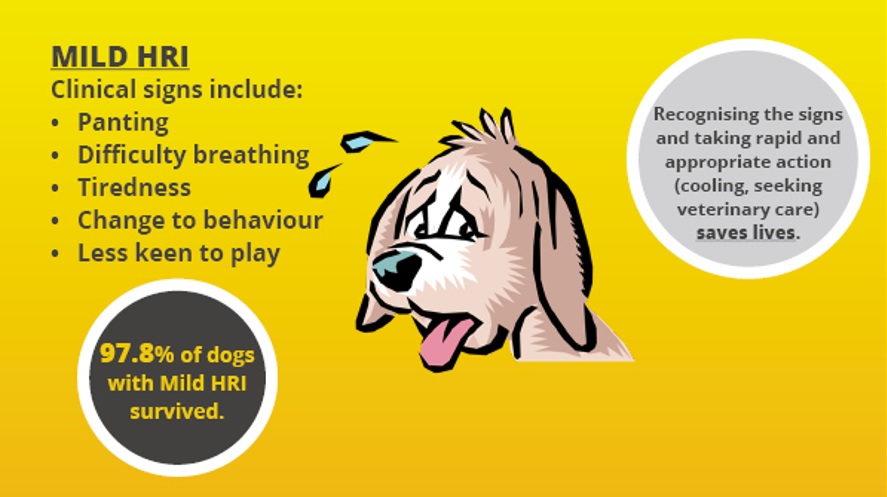
Signs of heat-related illness (of which “heatstroke” is the most severe) are:

What to do if your dog overheats:

To read the research behind this work, check out our “Access to our research” page.

To download our infographics for sharing/printing, you can access them here:

Human heat-health alerts – useful for dogs too!

Our latest study is now online, reporting the risk factors for heat-related illness (heatstroke) in UK dogs during 2022.

Epidemiology of heat-related illness in dogs under UK emergency veterinary care in 2022

In this Dogs Trust funded study, we reviewed all heat-related illness (HRI) cases from the 167,000 dogs presented to Vets Now (the UK’s largest emergency and critical care veterinary provider) during the UK’s current hottest year on record, 2022.

There were 384 cases, meaning 2 out of every 1000 dogs presenting to Vets Now in 2022 were treated for HRI. Highlighting the severity of this condition, the fatality rate was 26.6%; 1 in every 4 dogs treated for HRI died.

We should highlight that this new study deliberately targeted an emergency and critical care clinic population, so the results can not be compared our previous study of dogs under primary veterinary care during 2016.

Unsurprisingly, most of 2022’s HRI cases presented in July which saw the first UK temperature recorded over 40°C. Reflecting our previous study in 2016, dogs were affected all year round.

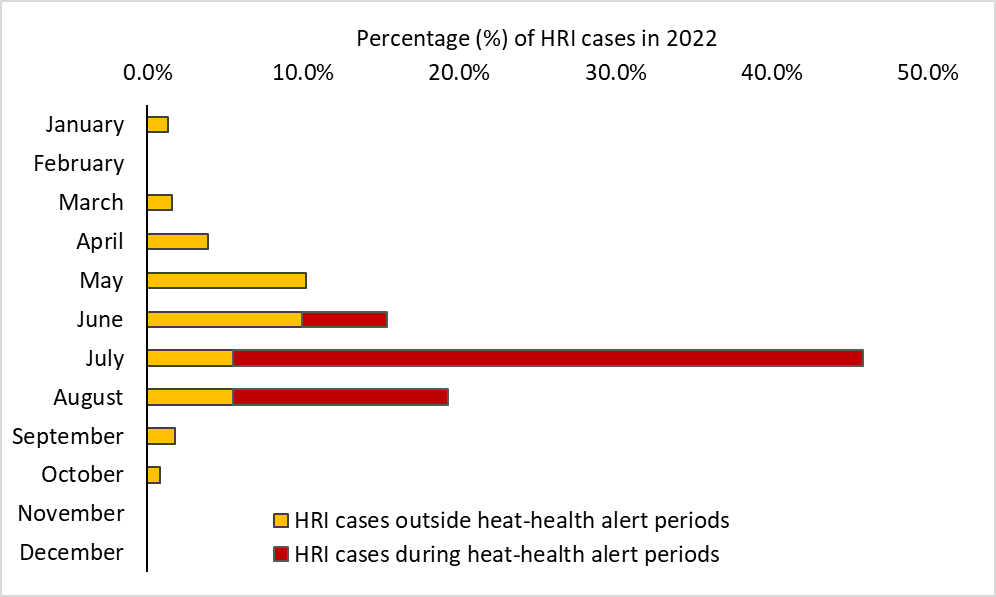
Overall, 80.5% of HRI events occurred during summer (June-August), and 74.1% of those summer cases occurred during the five heat-health alert periods declared by the UK Health Security Agency (UKHSA):

Number of canine HRI cases presented each month during 2022, with cases during the five heat-health periods highlighted in red.

We are therefore urging all owners to use human heat-health alerts to help prevent HRI in dogs. During heat-health alert periods we recommend avoiding known triggers of HRI as far as practically possible, especially in at risk dogs:

  • Exercise
  • Exposure to hot indoor and outdoor environments (especially if there is no shade or access to water for cooling)
  • Travelling in hot vehicles
  • Visiting stressful environments (such as groomers and potentially routine veterinary care visits that could be delayed if the dog gets stressed)

Overall, of the dogs with at least one trigger in their clinical history 51.5% included mention of exercise. However, 9.5% of cases included multiple possible triggers in the dog’s clinical history; for example the dog had been on a walk, in hot weather, then transported in a hot vehicle to the veterinary practice. Any, or all of those triggers could have contributed to the dog’s condition.

The following diagram illustrates the number of HRI events that included a history of each trigger, with overlapping sections indicating multiple potential triggers:

This diagram shows the number of canine HRI events that included each trigger in the clinical history. Overlapping regions indicate multiple triggers recorded.

In this dataset, we recognised “seizing” (having a fit) as a type of HRI trigger. When dogs experience a seizure, their muscles contract and spasm which generates heat, therefore the longer the seizure lasts, the more heat generated which can lead to HRI. To complicate matters, moderate-severe HRI can also CAUSE seizures, (in both epileptic dogs and non-epileptic dogs) so it isn’t always possible to tell what came first, the seizure or the HRI. Regardless, any dog experiencing a seizure during hot weather, or seizing for more than 1-2 minutes is at risk of fatal HRI so should receive veterinary care ASAP.

What should you do if your dog overheats?

Over 50% of the dogs presented for veterinary care with severe HRI died. This mirrors the results of our previous study of dogs treated for HRI in primary-care vet practices during 2016-2018. In contrast, 95% of dogs presented with mild-moderate HRI survived. We are therefore urging ALL dog owners to learn how to recognise the MILD signs of HRI, so they can take action as soon as possible to prevent disease progression, and potentially save a life.

Signs of mild HRI, from our grading tool.

No matter the cause of overheating, the aim should be to prevent further body temperature increase and promote cooling. As soon as a dog has overheated we recommend you:

  • Move the dog into the shade, ideally to a well ventilated area with air movement from wind/air conditioning/a fan.
  • Stop anything that could make the dog hotter, including exercise, stress, play.
  • COOL FIRST, TRANSPORT SECOND!
    • If the dog needs transporting home/to a veterinary clinic:
      • Cool using water. Pour any available water (cooler than the dog) over the dog and ensure air movement. For thick coated breeds focus on the neck, belly, groin and legs. Do NOT pour water near the head.
      • Offer small amounts of drinking water, but do not force the dog to drink.
      • Cool the vehicle before the dog enters, open windows and “pump” air out (if you open the windows on one side of the vehicle, then open and close the doors on the opposite side this will replace hot air with cooler outside air) or switch on air conditioning.
      • Ensure the dog is legally and safely restrained whilst travelling, and ideally maintain air movement over the dog if further cooling is needed.
  • Call a vet ASAP if there are any concerns the dog’s condition is serious, or may deteriorate.
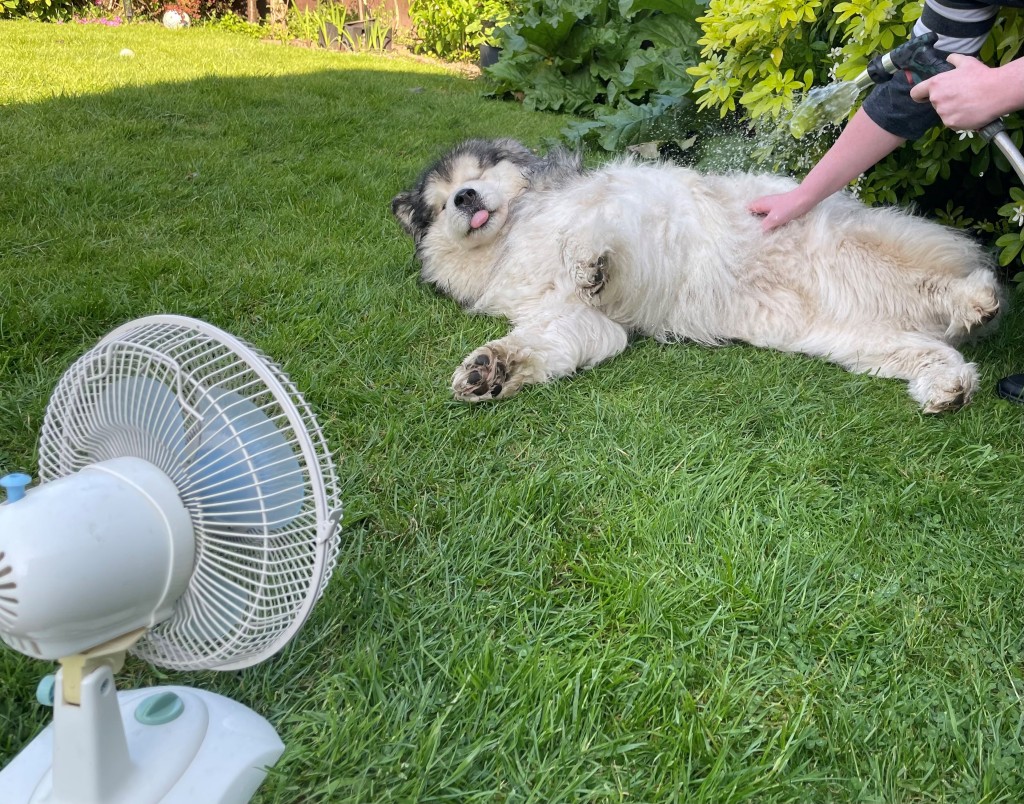
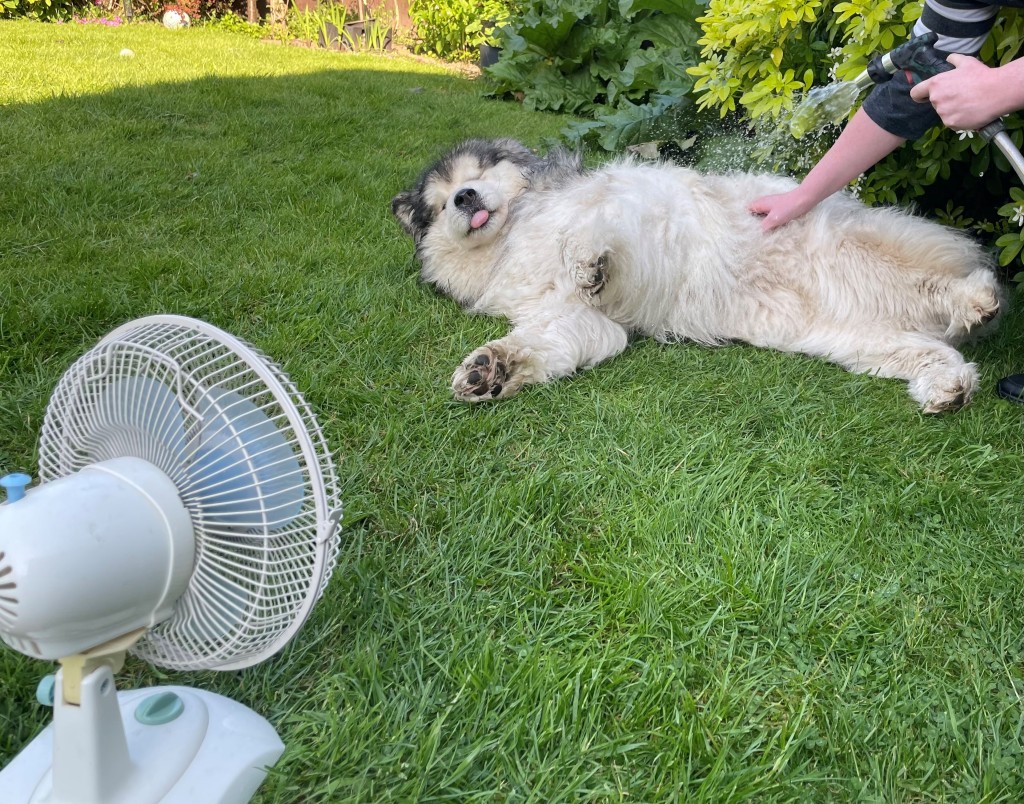
Ares the dog being cooled using cold-water from a hose pipe, in the shade, with air movement.

Are you ready to beat the heat? Cooling hot dogs – more myth busting.

Our second article on cooling hot dogs has been published, so as the UK weather turns warmer, now is the time to re-fresh your knowledge on the latest evidence on cooling hot dogs:

Post-exercise management of exertional hyperthermia in dogs participating in dog sport (canicross) events in the UK

We’ll start by thanking all of the dogs (and their owners) who participated in this study, as we couldn’t have done it without them! The study involved measuring ear temperature (more on this in our previous post) at three time points – 0-minutes (immediately after the dogs crossed the finish line), 5-minutes (after any initial post-exercise cooling) and 15-minutes after exercise – the dogs completed canicross races or training events in the UK. We asked owners to tell us how they managed their dogs in the period immediately after exercise, including any cooling actions and if the dog was housed in a vehicle, whilst we measured both the dogs’ temperatures and the ambient weather conditions. Just to be clear, when we say dogs were housed in vehicles, they were under direct supervision at all times and most of the events took place in the winter, in the early morning before ambient temperatures had started to rise. At some events, dogs were housed in vehicles to stop them getting too cold – especially the thin coated Lurcher types!

We observed five main approaches to post-exercise management of canicross dogs: water immersion, walking the dog outside, standing the dog outside, applying a cooling jacket, and no cooling (dog housed immediately in a vehicle).

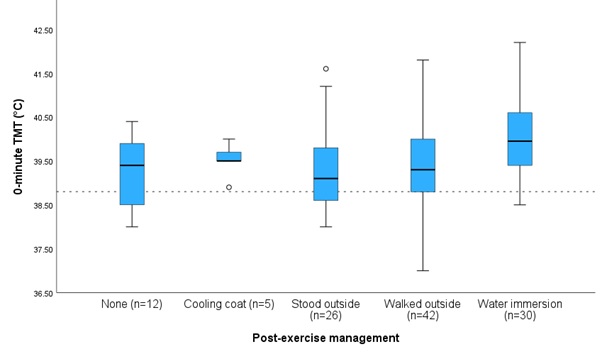
Box plot of the immediate post-exercise body temperature of canicross dogs, grouped by post-exercise management action.

As you can see, there was a lot of variation in post-exercise body temperature, with dogs finishing the events with ear temperatures measuring anywhere from 37.0 to 42.2°C. It is also worth noting that most of the events took place during the autumn-winter racing season in the UK, the ambient weather conditions (measured using wet bulb globe temperature) ranged from 0.4 to 24.6°C with a median temperature of 8.5°C. Before you consider judging the owners who took no cooling action, remember there was snow on the ground for some of these events, and no dogs suffered any adverse effects from either the exercise, or post-exercise management during the course of the two-year study.

A key finding we would like to highlight to all dog owners, is that around a quarter of the dogs had peak temperatures measured AFTER the exercise had finished, despite being cooled. Why is that important? The reason our core body temperature continues to rise after exercise is due to heat from the muscles being gradually re-distributed around the rest of the body by the blood circulation. Had we measured the dog’s muscle temperature immediately post-exercise, there would have been a difference between muscle and ear temperature, and that difference would have reduced as time progressed. Back to why that is important! We know both the degree of core body temperature elevation above 43°C (just how high the dogs temperature reaches), and the duration of elevation (how long the dog’s temperature remains critically high) contribute to disease severity and fatality from heat-related illness. One of the most heat-sensitive tissues is the brain, and brain damage can prove fatal to dogs with heatstroke. So the longer we allow the dog to remain hot, the more muscle heat can redistribute raising the dog’s core temperature, increasing the risk of severe heat-related illness. If you observe early signs your dog may be developing heat-related illness, simply stopping exercise may not be enough as their core temperature could continue to rise as the heat from their muscles redistributes to the rest of the body.

Unfortunately, we can’t answer that question from the results of this study; because this was an observational, field based study, the ambient weather conditions varied, the dogs themselves took part in different length races, the water for cooling varied by temperature at each event, and the cooling methods used by their owners were not standardised. In addition, if you look at the box-plot above, its probable the dog’s post-exercise temperature influenced their owner’s decisions about which cooling method to use. In addition, some dogs self-selected water immersion as the cooling method which, again, may have been influenced by their body temperature.

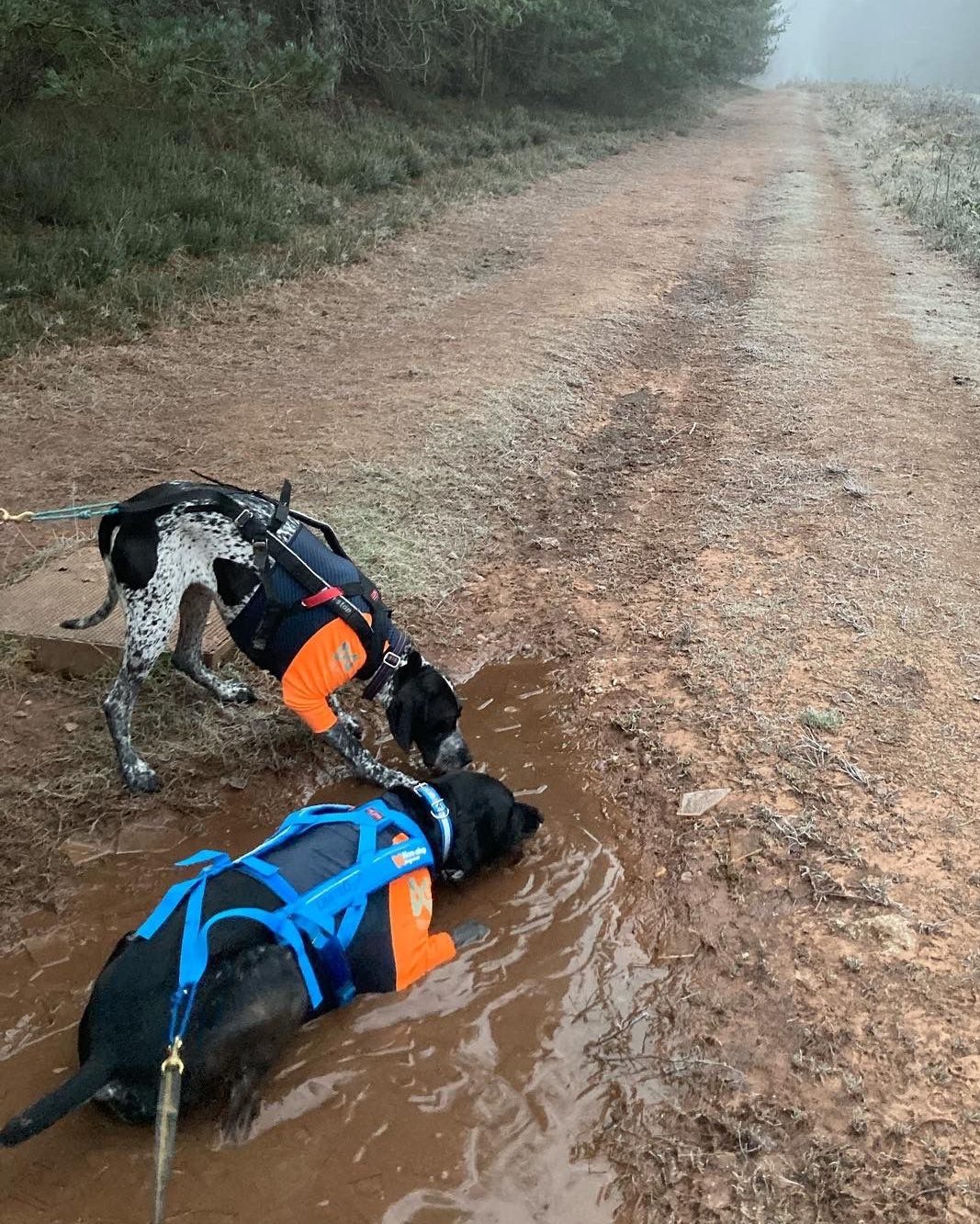
Hendricks opting for a mid run water immersion in a nice puddle (note the chunks of ice present!).

Whilst we can’t definitively say cold-water immersion is the most effective cooling method based on our study, there is a wealth of literature from humans, horses and dogs (see our previous post) to support cold-water immersion as the most rapid way to reduce body temperature.

We can, however, report we observed no adverse effects in any of the dogs cooled using cold-water immersion in our study, and can confidently report cold-water immersion is an effective cooling method for hot dogs. The water available for cooling ranged from 0.1 to 15°C, so would be defined as “cold” as opposed to “tepid”. Many dogs entered this water voluntarily (or should we say enthusiastically!) and remained in the water throughout the first 5 minutes post-exercise.

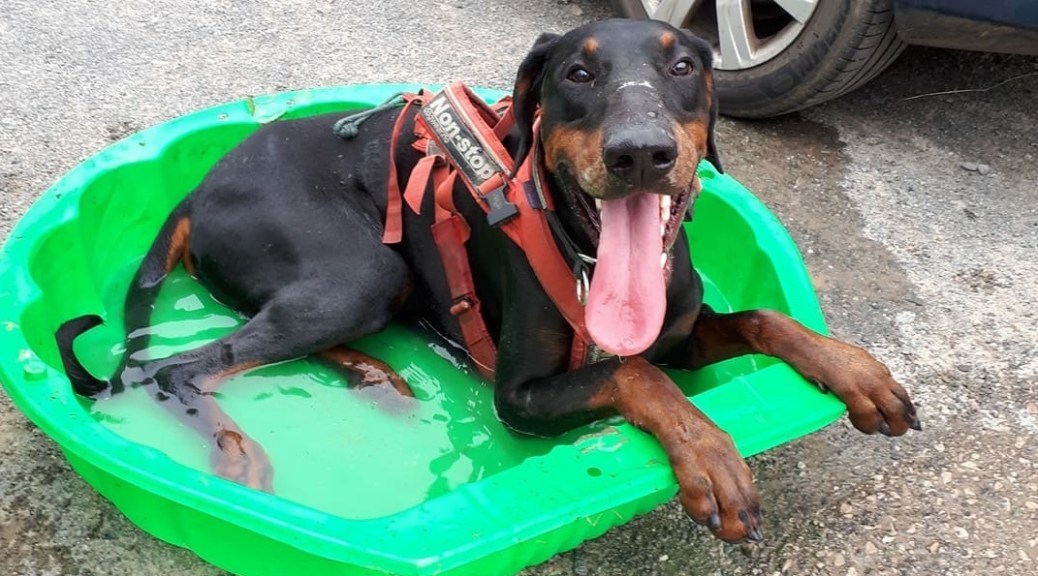
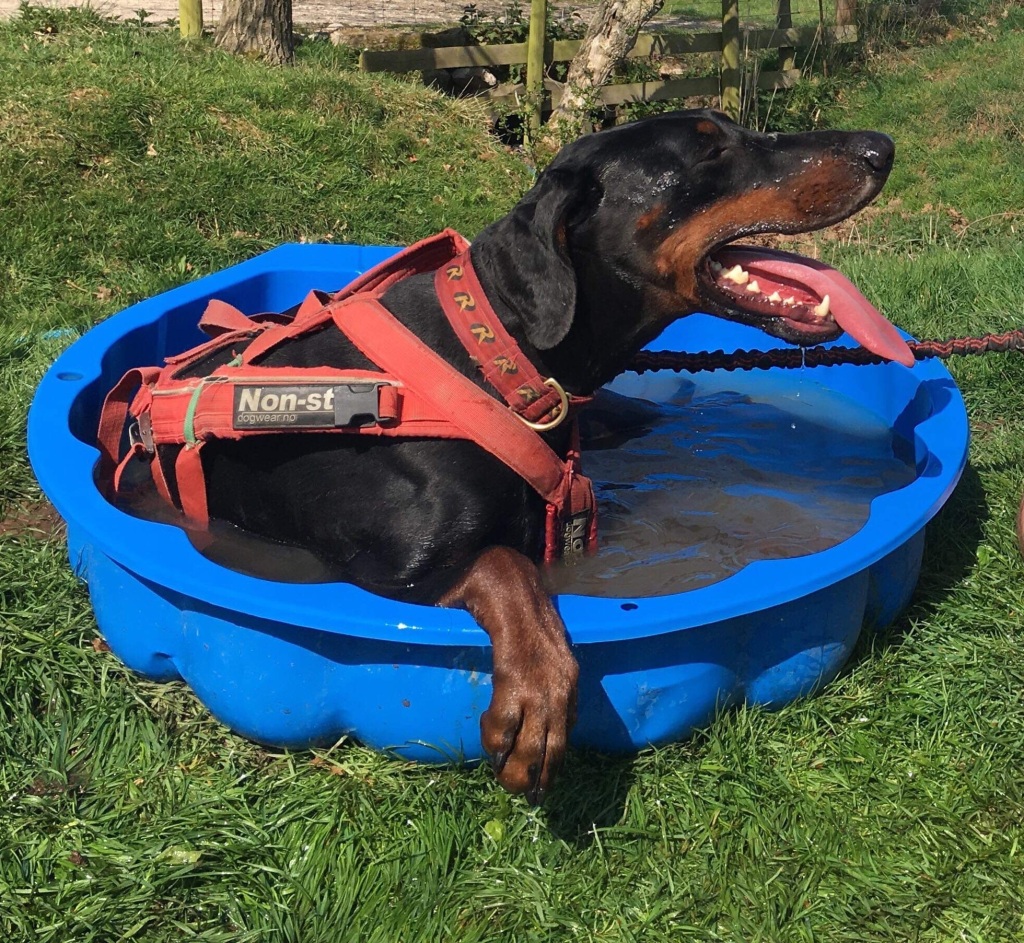
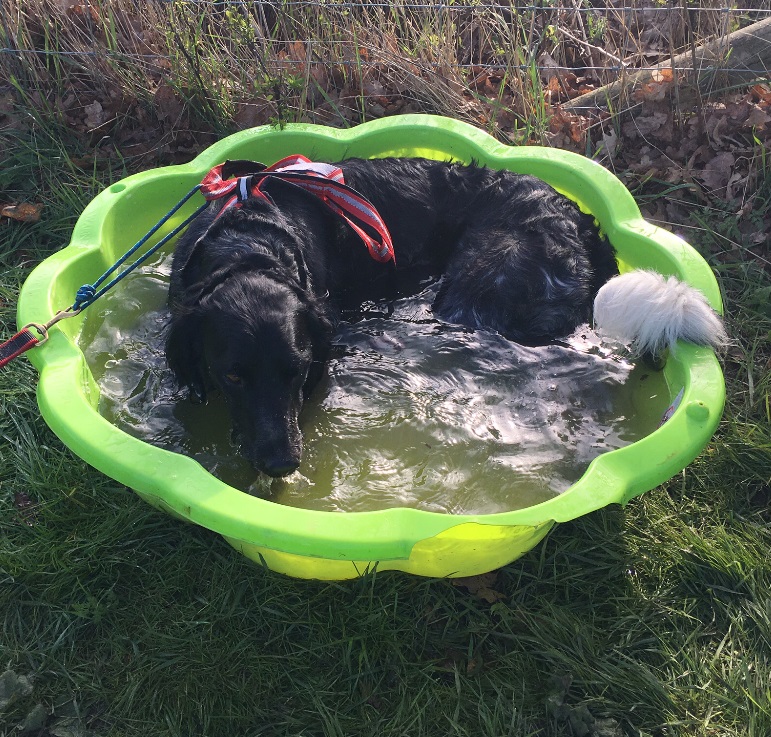
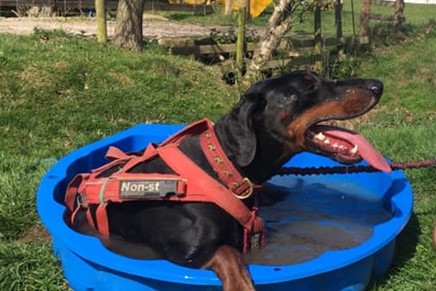
Ronin chilling in his paddling pool at one of the warmer events.

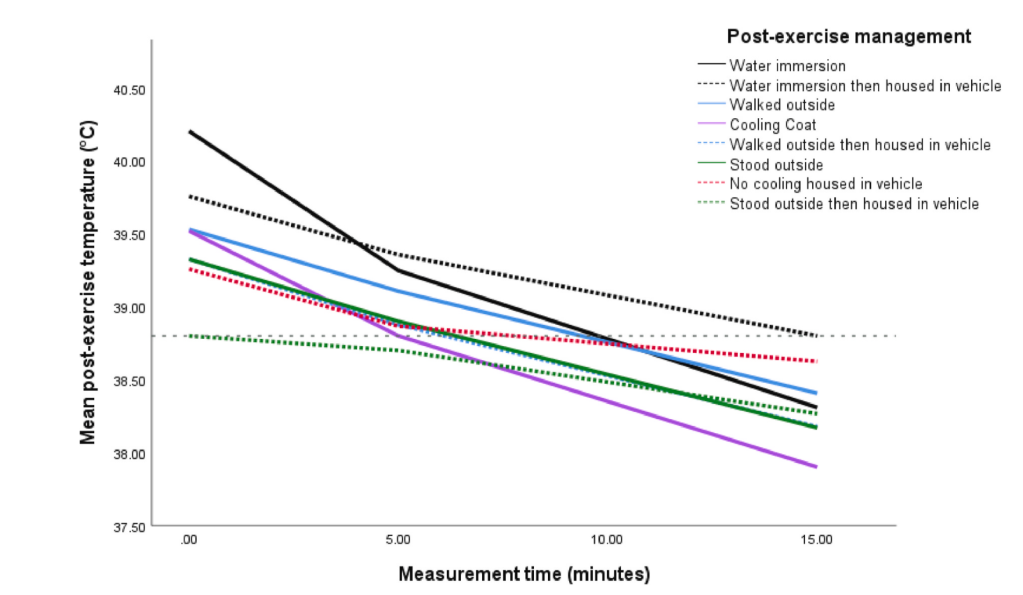
A key finding from our study supports this important message; if your dog overheats for any reason: cool first, transport second. If we review the average (mean) body temperature of all the dogs post-exercise, grouped by their management type (water immersion, walked outside, stood outside, cooling coat, none) and whether or not they were subsequently housed in a vehicle (dotted lines) in the figure below, we can see the hottest dogs were cooled using water immersion. More importantly, we can see no matter the cooling action applied, if the dog was subsequently housed in a vehicle, they cooled less.

Line chart showing the mean canine temperature at each time point, by post-exercise management method used, The solid black line is water immersion, all dotted lines indicate dogs who were housed in a car after exercise.

The reason dogs cool less once they’re housed in a vehicle is likely due to several factors. The internal car temperature is likely higher than the outside ambient temperature unless the air conditioning is in use, in addition, even with all windows open the dog will experience less air movement inside a vehicle, and air movement is important for evaporative cooling from wet surfaces (after water immersion for example). In our study, by 15-minutes post-exercise, over 80% of the dogs had a normal body temperature, despite many being housed in vehicles. However, consider that all of these canicross events took place in the morning, and mostly during the winter months with cool ambient temperatures. In the summer the internal vehicle temperatures would be hotter, potentially dangerously hot! So if you need to transport a hot dog for any reason we recommend:

  • Cool the dog before they enter the vehicle, ideally monitor their body temperature and aim to drop this below 40°C.
  • Cool the vehicle interior any way you can, open doors and windows (if safe to do so), or switch on air conditioning.
  • Transport the dog in compliance with any legal requirements, but ideally ensure continuous air movement over the dog to facilitate ongoing cooling if they remain overheated.
  • In a emergency situation, phone your veterinary practice for advice.

Cooling myths circulate every summer on human, canine and even equine social media sites, but the advice to “only use tepid/lukewarm water” is not supported by evidence. The longer the dog stays hot, the more damage potentially occurring and tissues like the brain and kidney may never recover.

Use whatever water you have available – provided it is cooler than the dog. One study simulating a hot, desert climate demonstrated that dogs can cool even in 30°C water. In our study, 0.1°C water was voluntarily entered by the dogs, resulting in rapid, effective cooling and no adverse effects to the dogs.

Water immersion isn’t without risks. Dogs can drown in water of any temperature! So when it comes to cooling with water there are two options available, but only one is safe for ALL dogs.

Evaporative cooling (application of water – spray, sponge, pour – combined with air movement):

  • Appropriate for ALL dogs, regardless of health or consciousness.
  • Safe for older dogs, dogs with underlying health concerns, respiratory disease, and even comatose dogs.
Ares the dog demonstrating evaporative cooling – in the shade, hose to apply water spray, fan for air movement.

Cold-water immersion (or should that be whatever-temperature-water available immersion!):

  • Only appropriate for CONSCIOUS dogs, otherwise the risk of drowning is too great.
  • Most appropriate for healthy dogs, so those younger and fitter, without respiratory disease, brachycephaly (flat faces), or cardiovascular disease.
  • If the dog attempts to leave the water, let them.

A final point to finish, if the worst does happen and your dog develops heatstroke (severe heat-related illness) and loses consciousness, they will stop panting. As a result, they will cool more slowly, so you will need to be more aggressive with your cooling measures to bring their body temperature down.

Current advice is to STOP COOLING once the dog’s temperature drops below 40°C (many texts say stop at 39.5°C). This is especially important for older dogs, unwell dogs, and unconscious/comatose dogs as they will struggle to regulate their body temperature.

So as the temperatures in the northern hemisphere start to rise, make sure you have a plan to beat the heat with your dog. If in doubt, don’t go out! But if your dog does overheat, do you have water to cool them?

Ares always knows where the nearest water is for cooling!

Myth busting – cooling hot dogs

We are finally able to share the first of (hopefully!) two articles we have been preparing this summer on the topic of cooling hot dogs. This summer has seen the usual barrage of social media posts promoting canine cooling myths, with some big names in the UK veterinary world doing their best to dispel the ongoing myth that cold water cooling is dangerous for dogs. We were also approached by a “fact checking” organisation to comment on the “did you know” post that advocated for cooling using only damp towels, so here is our take on cooling hot dogs using the best available evidence from the scientific literature.

Veterinary Guidelines:

In 2016, the The American College of Veterinary Emergency and Critical Care’s Veterinary Committee on Trauma (Vet-COT) published “prehospital” care guidelines for managing dogs and cats. In other words, a group of veterinary critical care specialists came together to scour the best available scientific evidence to develop guidelines for providing emergency care to pets before they could be transported to a veterinary practice. These guidelines made two key recommendations:

1 – Cool first, transport second.

2 – Cool using water, either cold-water immersion for young/healthy dogs, or evaporative cooling (application of water alongside air movement from a fan/air conditioning/breeze) for older/unwell animals.

For clarity, this is cold-water immersion:

Ronin here (in the image) is post canicross race, and has elected to immerse himself in the available water bath, lying down and staying here until he felt ready (cool enough) to get out! Anne and Emily have observed years of canicross races, and dogs will literally drag their humans towards lakes, streams, ponds, paddling pools, whatever cold-water is available for cooling. And that water is COOL, we measured a lake with water at 0.5˚C, and the dogs ran straight in and stayed there until they were ready to get out, in December.

Cold-water immersion is the recommended treatment for exertional HRI (heatstroke) in human athletes too.

Evaporative cooling looks different depending on the resources available, but here Ares the Malamute is demonstrating evaporative cooling using a hose pipe and electric fan:

In a true emergency situation if you don’t have a means of immersing the dog in cold-water, or if the dog is unwell/unconscious (drowning is a very real risk for unconscious dogs in water), then evaporative cooling is the next best option. Apply whatever water you have (provided the water is cooler than the dog), and ensure the dog is out of the sun, but has air movement from either a fan, the breeze or air conditioning.

Myth busting – is cold water cooling really dangerous?

No.

Cold-water immersion is the recommended cooling method for young, healthy individuals with HRI (heatstroke). There is a wealth of evidence from equine and human medicine to support cold-water cooling as the most effective treatment for profound hyperthermia.

In dogs, there may be less evidence, but the research available supports cold-water cooling. We’ve talked about a study published in 1980 before, and whilst this study would not receive ethical approval by today’s standards, the results need to be remembered. Conscious dogs with HRI cooled faster in 1-16˚C water, than they did in 18-25˚C water. Comatose dogs with HRI had the highest rate of cooling in 1-3˚C water, but it should be noted that comatose dogs cooled slower than conscious dogs. This is because comatose dogs stop panting, and panting is a vital method of thermoregulation for hot dogs.

That being said, any water (cooler than the dog) is better than no water.

A study of military working dogs compared cooling dogs by immersion in 30˚C water (what would be room temperature water in hot environments), with letting the dogs rest in front of a fan, or rest on a cooling mat in front of a fan. Immersion in 30˚C water resulted in significantly faster cooling post exercise. So the message is clear, use whatever water you have available, provided it is cooler than the dog.

Myth busting – are water-soaked towels the best option?

No.

That being said, we don’t actually have any strong evidence evaluating the effectiveness of water-soaked towels as a cooling method in dogs, we’re extrapolating research from other species. In horses, water-soaked fabric sheets were compared against evaporative cooling, and simply standing the horse to rest. There was no difference in cooling rate between the horses “cooled” using water-soaked sheets, and those simply standing to rest. In humans, iced wet towels are recommend to facilitate athlete cooling in rest breaks during exercise (for example football players between time on pitch), but this was for prevention of HRI, not treatment should HRI develop.

In short, applying a water-soaked towel is better than doing nothing, but cold-water immersion or evaporative cooling are the preferred method for cooling dogs with HRI in an emergency.

In dogs, water-soaked towels can also be used to facilitate keeping dogs cool to prevent HRI. Here Quinn the Cav is keeping cool in 35˚C heat in the UK, by staying in the shade, drinking plenty of water, making the most of the breeze, and wearing a continually soaked evaporative cooling vest. Crucially, the cooling vest was used to PREVENT heating at rest, not as a treatment for HRI.

The problem with cooling vests, and placing water-soaked towels over hot dogs, is that the dog can’t remove the vest/towel. So once the vest/towel dries out, it is no longer providing any cooling action, they require constant wetting to be effective. A towel placed over a dog will prevent air circulation to the skin, so once the towel is dry it will limit further convective cooling.

For thick coated dogs, the hair will limit the towel’s contact with the skin, so will limit cooling. Below, Ares is demonstrating an alternative, placing the water-soaked towel UNDER the dog. The towel is in better contact with the thinly haired regions on the abdomen and legs, and Ares can get up and walk away when he wants to. Again, this water-soaked towel is being used to keep Ares cool to prevent him overheating, not to treat HRI.

Myth busting – should you immediately transport a hot dog for treatment?

In an emergency, the advice is usually to seek veterinary treatment ASAP. On the whole this is excellent advice. However, for both humans and dogs with HRI, the recommended action is “Cool first, transport second”.

In human medicine, a recent study in the US found a mis-match between the sports medicine recommendation to “cool first, transport second”, and the emergency medicine first responder guidelines for managing patients with HRI which prioritised transporting patients to hospital for cooling. So who is right?

Two large human hospital studies from Japan and China have demonstrated that active cooling reduces mortality in patients with HRI, and rapid cooling in the first 2 hours of HRI treatment improves survival. In dogs, we know that both the degree of body temperature elevation above 43˚C, and the duration of temperature elevation above that critical threshold predicts HRI severity. In other words, the longer the dog’s temperature remains critically elevated, the more severe the damage. Therefore, rapid cooling should be a priority to limit the potential for thermal damage, and limit the severity of HRI.

From our previous work we know that dogs presenting to vets with severe HRI had 65 times the odds for death compared to dogs presenting with mild HRI. Less than half of the dogs presented to vets with severe HRI survived.

Cooling myths are harming dogs.

Our latest study reviewed the clinical records of dogs presented to primary care (GP) vets in the UK during 2016-2018, to explore the cooling methods being used to manage dogs with HRI. First things first, we should note that those US Vet-COT guidelines from the start of this post were only published in 2016, so it should come as little surprise to anyone that they hadn’t fully disseminated into UK vet practice.

What did we find? Firstly, just 21.7% of dogs presented for veterinary treatment of HRI had been cooled prior to transport. So the rest of those dogs experienced a delay before being actively cooled, meaning they stayed hotter for longer. The message to “cool first, transport second” needs to be prioritised in first aid advice for managing dogs with HRI. On a more positive note, of those dogs cooled prior to transport, only 10.8% required further cooling by the veterinary practice on arrival. Over 50% of dogs cooled by their owner received active cooling used water (cold-water immersion, water spray, or evaporative cooling).

Overall, just 24.0% of dogs were cooled using the Vet-COT recommended methods – cold-water immersion or evaporative cooling. In contrast, 51.3% of dogs were cooled using water-soaked towels. Now, we didn’t attempt to analyse the effectiveness of those cooling methods, as this was a retrospective study and there are too many factors to consider in that analysis. But we can say with certainty that the myth that water-soaked towels are the best option for cooling hot dogs has influenced how people manage dogs with HRI, despite there being NO SOLID EVIDENCE to support this myth.

What next?

Whilst we’re busy analysing our other cooling study, we have two clear messages for anyone living or working with dogs. If you are faced with a dog that develops HRI:

  1. Cool first, transport second. By all means phone the vets immediately, but don’t leave the dog hot whilst they travel.
  2. Use water to cool the dogs:
    • Cold-water immersion for young/healthy dogs.
    • Evaporative cooling (water application plus air movement) for any dog.

We end with an image from Chiara Di Giorgi, which illustrates evaporative cooling for a cat 🙂 This elderly cat has a nasty habit of falling asleep in a very hot conservatory (remember older animals are at increased risk of HRI, cats over 15 years of age especially), and has been treated for HRI previously… thankfully on this occasion rapid, active cooling using evaporative cooling (water application and air movement) saved the day.

New thinking on heat-related illness (heatstroke) in dogs

We’ve condensed our research so far into an article for the Kennel Club, sharing updates on the recognition of heat-related illness in dogs, the breeds at risk, and the most common triggers of this life-threatening condition.

You can read the full article here:

First published in the May 2021 edition of the Kennel Gazette. Copyright The Kennel Club Limited. Reproduced with their permission.

As summer finally arrives, we’re asking all dog owners to remember that

Dogs die in hot cars and on hot walks!

If your dog’s exercise has been limited by the UK’s lockdowns, or they have perhaps developed a little “lockdown bulge” they will be at greater risk of developing heat-related illness as the weather starts to warm. So make sure you can recognise the early signs, and always have a plan to cool your dog in an emergency.

Could you spot the signs of heat-related illness (heatstroke) in your dog?

We tend to go a little quiet over the winter, but we’re back with our latest research sharing the signs of heat-related illness in dogs presenting to UK vets. This is our third project working with the VetCompass team, and follows on from our research showing which UK dog breeds are at greatest risk of heatstroke and that exercise is the leading trigger of heatstroke in UK dogs.

Read the full study here (open access).

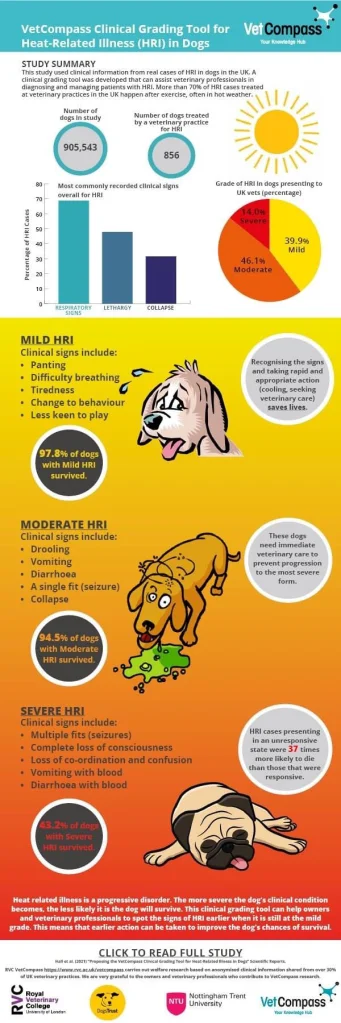
Our latest paper reports the most common signs of heat-related illness in dogs, abnormal breathing (excessive panting, and/or difficulty breathing) and lethargy (unwillingness to exercise, play or interact, changes in behaviour and tiredness). Crucially, dogs that are presented to vets showing just these early signs, were far more likely to survive.

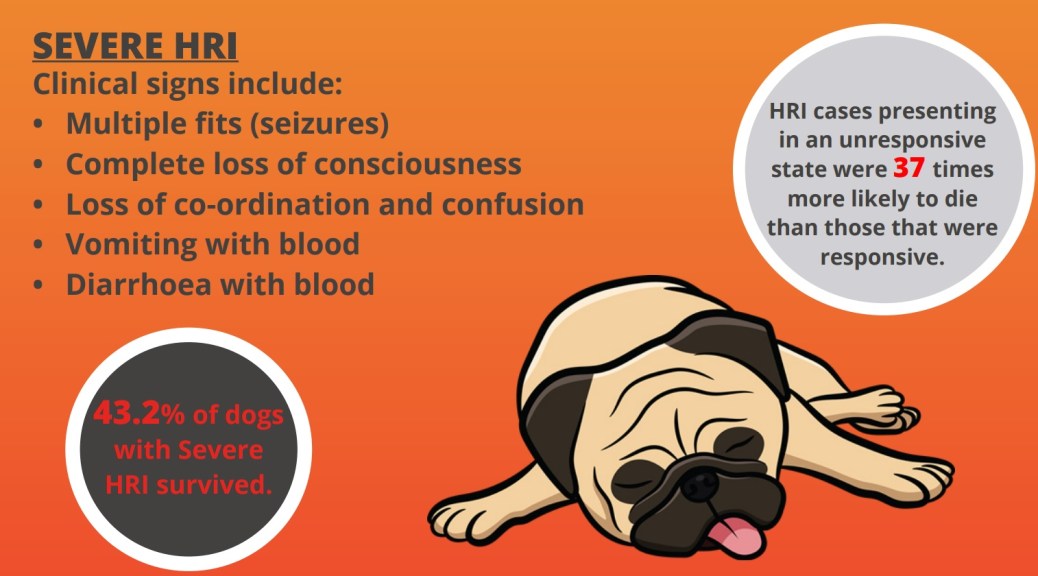
When dogs presented to their vet with signs of severe heatstroke (neurological changes including multiple seizures, loss of consciousness or being comatose, bleeding disorders including passing vomit or diarrhea with blood, and organ damage), less than half survived (just 43.2%).

We are urging ALL dog owners to familiarise themselves with the EARLY signs of heat-related illness, as spotting these and taking appropriate action – cool your dog and seek veterinary advice – could save your dog’s life!

The AMAZING Camilla from the VetCompass team has turned our findings into this brilliant info-graphic, which we encourage you to download in full and share with as many dog owners as possible, as the UK weather starts to turn warmer!

Proposing the VC Clinical Grading Tool for Heat-Related Illness in Dogs

We will be presenting this tool in the BSAVA 2021 Clinical Abstracts in May, and will be sharing our findings on cooling methods used by UK vets, so watch this space for more updates over the coming months!

Dogs in hot cars, why such a problem?

The problems with cars…

The average car is a metal box with glass windows. Metal is an excellent conductor of heat, meaning heat can pass through metal easily, think of your kitchen saucepans. Glass is a poor heat conductor but allows sunlight to pass through. This means that light energy from the sunlight enters the car through the windows but then gets trapped as heat by the glass. Some of this heat will be lost through radiation and conduction into the surrounding air, but if sunlight continues to fall on the car, it will continue to heat and in summer, this happens far quicker than heat can be lost to the environment; the reason greenhouses are so effective.  The net result is your classic summer hot car.

IMG_7346

The typical British summer is an unpredictable affair. Whilst temperatures regularly reach 20oC or more, often we have consistent cloud cover, intermittent rain or high winds to keep things feeling fresh, and stop cars turning into ovens.  Last summer, we experienced one of the first prolonged heatwaves of this century, with temperatures regularly hitting 30oC and endless blue, cloudless skies.  We have become complacent. Our dogs are typically part of our family, so we like to take them with us, whether we are taking them for a walk, for a day out, or travelling somewhere. The problem is, on a typical sunny day of 21oC, your average family car will reach temperatures of 31oC in 10 min. As the outside temperature climes to 31°C, the internal temperature of the car can reach 54°C. 80% of that temperature rise happens in the first 30 minutes.

We’ve all seen the adverts, surely no one would be so stupid…?

Since 2016, summer has been heralded by the “dogs die in hot cars” campaigns supported by a number of charities to increase awareness of the risk of leaving dogs in cars in the summer, and yet last year (2018) the RSPCA received 8290 calls, an increase from around 7800 calls concerning heat exposure in animals 2017. In a single weekend, over the 2018 May Bank holiday weekend, 217 calls were made by people concerned about dogs left in hot cars. One London police force was even offering a ‘free ventilation service’ if dogs were left in cars during the hot weather (by breaking the window).

car window

So why do people leave dogs in hot cars? A two-minute trip into the shop for a couple of forgotten items can easily become ten minutes. When questioned, owners gave a range of excuses, from “My dog is white, he’ll be fine” to “We feel bad leaving him at home on his own all day.” “We didn’t think we’d be long.” “It’s OK, I’m a vet”. No doubt, the vast majority of people do not want to harm their dog, but simply do not think. When leaving the car, the air con or open windows from travelling can make the car feel relatively cool. However, left in the sun for any length of time, even with the windows cracked slightly, it will get hot. Shade can help to keep the car cooler, but as the sun moves round, the shade can quickly disappear.

A human in a similar situation would begin to sweat to try and lose heat. Dogs don’t have the ability to sweat, they will pant, but as the temperature continues to rise, panting becomes less effective, and once the car temperature exceeds body temperature (around 38oC) there is nothing the dog can do to cool down. Unless the dog is actively cooled (see below) their body temperature will rise with the car temperature, and once they exceed 41oC, they are likely to develop heatstroke.

Heatstroke – the problem

Heatstroke isn’t the same thing as sun stroke, or heat cramps, or heat exhaustion.  These conditions can often be treated with cooling, plenty of fluids and rest. True heatstroke causes multi-organ failure. Picture an egg in a frying pan, you crack the egg, the yolk is yellow but the egg white is clear and jelly like.  Once the egg starts to heat, the chemical structures of the proteins start to change, the egg white becomes firm and changes colour. Now imagine this happening to the proteins within the body. As body temperature exceeds 41oC the stomach and intestines stop functioning, so the dog may vomit or pass bloody diarrhoea. The kidneys stop working, so despite fluid therapy the dog is unable to flush out the toxins from all the cellular damage taking place around the body. If the dog’s brain overheats, they may start fitting, or fall into a coma. The mortality rate for dogs with heatstroke is up to 63%.

Don’t risk it.

Don’t keep your dog in the car and never leave them unattended. Even in the shade, car temperatures can increase quickly, and shade may disappear. Leaving windows partially open has little effect on car temperature. If you are stuck in traffic or travelling, have the air conditioning on to keep the car cool and make sure windows are shaded from direct sunlight. Don’t assume your dog in the car boot area is fine because you are, check them regularly, your air conditioning may not reach the boot. Ideally, leave your dog at home in hot weather. Car shields and shades may help to keep the car cool by reflecting the sun’s rays, but some may also act as an insulator, particularly if the car is already hot inside. If you have no alternative other than to keep your dog in the car, open all windows, open the boot, try and maintain airflow, park in shade, and don’t leave your dog. Stay with them so you can be absolutely sure they are OK.

dog car

If you see a dog in a hot car, the advice is to phone the police. Heatstroke can kill quickly. A dog that is suffering from heatstroke needs to be actively cooled and taken to the vets. Active cooling is key. Even before setting off to the vets, use water to splash the dog’s legs, belly and throat area, get them out of the sun and into the shade, and if possible move them somewhere with good air flow – this might be in a car with the air conditioning already blowing. To give you an idea, the army have been known to use the downdraft from helicopter rotor blades to create airflow over soldiers with heatstroke. Next, getting to the vets as quickly as possible is the current best advice. Avoid using ice or very cold water, as this can do more harm. When your skin is cold, the blood vessels constrict, which can make it harder to cool the dog, and increase the risk of them going into circulatory collapse (shock).

There is no guarantee any dog will survive heatstroke, so the best way to keep your dog safe is to prevent it.

Hot Dogs – investigating the epidemiology of canine heatstroke presenting to UK primary care veterinary practices

The Hot Dog’s team (Emily and Anne) are now working with Dan O’Neill from the Royal Veterinary College on a UK wide canine heatstroke study. The study will use data from the Vet Compass™ database to review the clinical records of over 900,000 dogs registered with UK primary-care veterinary practices for heatstroke events. As well as canine risk factors (e.g. breed, age, sex and bodyweight), additional information will be collected to establish the incidence, fatality rate, seasonality and underlying causes for canine heatstroke. Understanding the risk factors of heatstroke specific to the UK dog population will provide evidence to better support educational campaigns aiming to reduce or prevent this potentially fatal condition.

This project has been funded by a Dogs Trust Canine Welfare Grant.

logo_DogsTrust

The results of this (likely two year) project will be published in an open access journal, so the link will appear here on the Hot Dog’s site as soon as it is available!

hot stevie