
[Updated July 2024]
Heatwaves and rising global temperatures threaten both human and canine lives. The UK’s Environmental Audit Committee warns the frequency of such heatwaves is likely to increase , with the number of human deaths potentially increasing three fold. We have been warned that society needs to be “better prepared” for such heat, so here at Hot Dogs Canine Research we’re starting now!
Firstly, some “fake news”
Ice cubes are not dangerous to dogs, provided they are used appropriately. There has been a lot of misinformation on social media regarding ice cubes, with a recent story suggesting that a vet warned owners ice cubes could kill their dog. This story has been misinterpreted. A dog with heatstroke should not be cooled with ice cubes. We’ll come on to why later in the post. A dog in a heatwave getting fed up with the hot weather, can absolutely have the odd ice cube. Or iced dog food popsicle, or frozen cream cheese lick mat! A fit and healthy dog, will not suffer any ill effects from consuming frozen food or ice cubes, in the same way that we suffer no ill effects from ice lollies. They should be provided in moderation, and they should not replace constant access to clean, fresh, cool water.


Cooling a playful dog
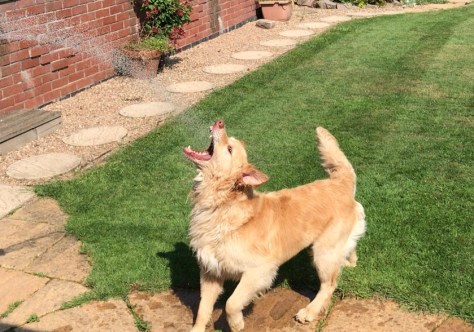
If you have a dog that is a little too stupid to realise it is too hot to play (see Stevie below for a classic example), you should consider active cooling methods to stop them overheating. Stevie is partial to a hosepipe. He gets to play in the jet of water for a couple of minutes, then the hose is switched off. Dogs have died from water poisoning, so it is important to not encourage your dog to drink excessively when it is hot. Avoid lots of toy chasing/retrieving, or allowing dogs to snap at running water for prolonged periods. Stevie gets a couple of minutes, then the hose is switched off – moderation is the key.
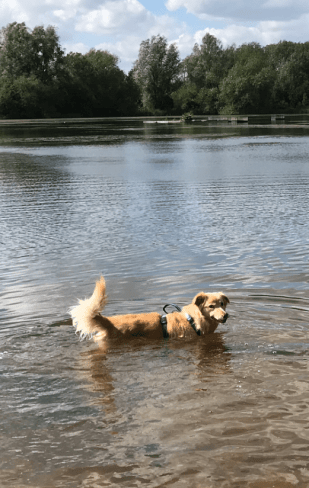
Swimming or sitting in water is also a great way of keeping cool. Dog proof paddling pools are great – the inflatable ones often succumb to punctures from claws – and some dogs will choose to just climb in and lie down. Swimming in open water is not only a great way to cool down, but also excellent exercise for hot dogs. Sadly during summer blooms of blue-green algae can render small lakes and ponds dangerous to dogs, so keep an eye out for warning signs and learn how to recognise the problem here.
Cooling coats and mats are becoming increasingly popular, but be aware there is no robust evidence to support their use, yet.
Cooling a hot dog
If your dog is hot from exercise, you may want to consider actively cooling them on a regular basis. Dogs do not sweat (apart from their paws) so they rely on panting and losing heat from their body through radiation into the environment, or conduction to colder surface or liquid. There is strong evidence that dogs continue to overheat AFTER they have finished exercising – our study investigating cooling in dogs supports this finding in canicross dogs – so the risk of heatstroke doesn’t end just because the exercise does.
There is a growing body of evidence to support cooling rapidly with cold water!
Our study of exercising dogs demonstrated that cold-water immersion at temperatures as low as 0.5oC can safely and rapidly cool hot dogs.
A recent study in the US compared cooling dogs with immersion in 22oC for 30 seconds, standing dogs on alcohol soaked towels for 30 seconds (the old “putting spirit on the dog’s paws” but scientifically), or no cooling actions. Unsurprisingly, dogs cooled fastest when immersed in water, even after such a short dip. There was some evidence the dogs found the alcohol soaked towels unpleasant, so unless the ONLY thing you have access to is a bottle of hand sanitizer, cool using water.
One US study even explored cooling dogs using 30oC water, to mimic conditions for working dogs in desert conditions. The dogs still cooled faster than those left to stand in front of a fan.
Do be aware that dogs can drown! So any dog with breathing disorders, or a dog that has reduced consciousness, should NOT be immersed in water unless you can ensure their head stays clear to prevent drowning. Keep yourself safe too, if there is any risk of drowning, use evaporative cooling (covered below) rather than water immersion.

If like Murphy here (below on the paddle board), your dog likens water to a dog eating monster, you may struggle to get them into a paddling pool or stream for a quick dip. Applying water with spray bottle, or sponge to the legs, inner thighs, belly and neck is the next best advice. Dogs with a heavy coat can become water logged, and can take an age to dry, so targeting the areas with less hair, like the belly and thighs, can provide some relief, without causing too much of a wet dog smell.

Allowing your dog to drink is incredibly important. Dehydrated dogs get hotter when exercising , and are at greater risk of heatstroke. If your dog has been unwell, especially with diarrhoea or vomiting, they are more likely to be dehydrated, so ideally don’t allow them to exercise until they are fully recovered. Allowing your dog to drink tap water (typically between 10-15oC depending on the time of year) will help them to cool, and maintain hydration. Again you need to know your dog. If they are likely to drink a 2 litre bowl dry in one sitting and ask for more, you may need to stagger their intake, but most dogs will drink as needed.
Cooling a dog with heatstroke
Again, there have been several stories on social media regarding cooling dogs with heatstroke, very few backed by up solid science.
Much of what we do know, comes from the dark days of science well before the Animals in Scientific Procedures Act 1986 legislation. Dogs were heated to the point of collapse, or unconsciousness. This study found that comatose dogs cool differently and much slower than conscious dogs with heatstroke. We know that dogs presenting to vets in a coma tend to have a poor prognosis for survival, likely due in part to their inability to effectively cool.
A conscious dog with heatstroke was found to cool quickest when immersed in water at 15-16oC (tap water temperature!). These dogs climbed out of the water baths themselves once they had recovered.
The comatose dogs cooled much slower than the conscious dogs, largely because they stopped panting. Their rate of cooling was similar in water temperatures ranging from 1 to 16oC.
In an emergency situation, the current best available advice for treating heatstroke is WET THEN VET! Continuously pour water (any water cooler than the dog) over the dog, with as much air movement as possible, a fan or air conditioning is ideal. Then transport the dog to a vet ASAP (maintaining air flow over the dog), especially if they are already comatose. These dogs need emergency care to maintain their blood pressure and try to save their brain, kidney and liver function. Ideally cool the car down before the dog enters, and try not to lay things over the dog, like wet towels, as this could restrict air flow to the skin and could reduce heat loss.
Why do we say any water cooler than the dog? Because rapid cooling saves lives. If you delay cooling to seek the “correct” temperature water, the dog is still cooking, with the heat causing more and more damage. So use whatever is available quickly.
In our study of dogs presenting to UK vets for treatment of heatstroke, just 21% of dogs had been cooled prior to transport, and only 25% received the recommended cooling methods of evaporative cooling (pouring water over plus air movement) or cold-water immersion. In contrast, over 50% had been cooled with wet towels, which if left to dry will trap heat rather than providing cooling. So if you see social media posts claiming to share “life saving advice warning against cooling rapidly using water”, click report as fake news, and DO NOT SHARE! Instead, promote the evidence-based guidance:
- Cool first, then transport (WET THEN VET!)
- Cool using water cooler than the dog!
The single most effective way to ensure a dog’s survival, is to prevent heatstroke from happening.
Once heatstroke has occurred, rapid action is required. If the dog is still conscious, allow them to drink a little, and cool them with tap water. Seek veterinary care quickly. If the dog has already lost consciousness, every single second counts. Rapid cooling, then ideally continue cooling on route to the vet.
If its hot outside, chill out! Lie back, put your feet up, and enjoy a nap like Monty here.

 Hot Dogs - heatstroke education for dog owners
41 thoughts on “Cold as ice: Keeping hot dogs cool.”