
Our latest study is now online, reporting the risk factors for heat-related illness (heatstroke) in UK dogs during 2022.
Epidemiology of heat-related illness in dogs under UK emergency veterinary care in 2022
In this Dogs Trust funded study, we reviewed all heat-related illness (HRI) cases from the 167,000 dogs presented to Vets Now (the UK’s largest emergency and critical care veterinary provider) during the UK’s current hottest year on record, 2022.
There were 384 cases, meaning 2 out of every 1000 dogs presenting to Vets Now in 2022 were treated for HRI. Highlighting the severity of this condition, the fatality rate was 26.6%; 1 in every 4 dogs treated for HRI died.
We should highlight that this new study deliberately targeted an emergency and critical care clinic population, so the results can not be compared our previous study of dogs under primary veterinary care during 2016.
Use human heat-health alerts for dogs too
Unsurprisingly, most of 2022’s HRI cases presented in July which saw the first UK temperature recorded over 40°C. Reflecting our previous study in 2016, dogs were affected all year round.
Overall, 80.5% of HRI events occurred during summer (June-August), and 74.1% of those summer cases occurred during the five heat-health alert periods declared by the UK Health Security Agency (UKHSA):
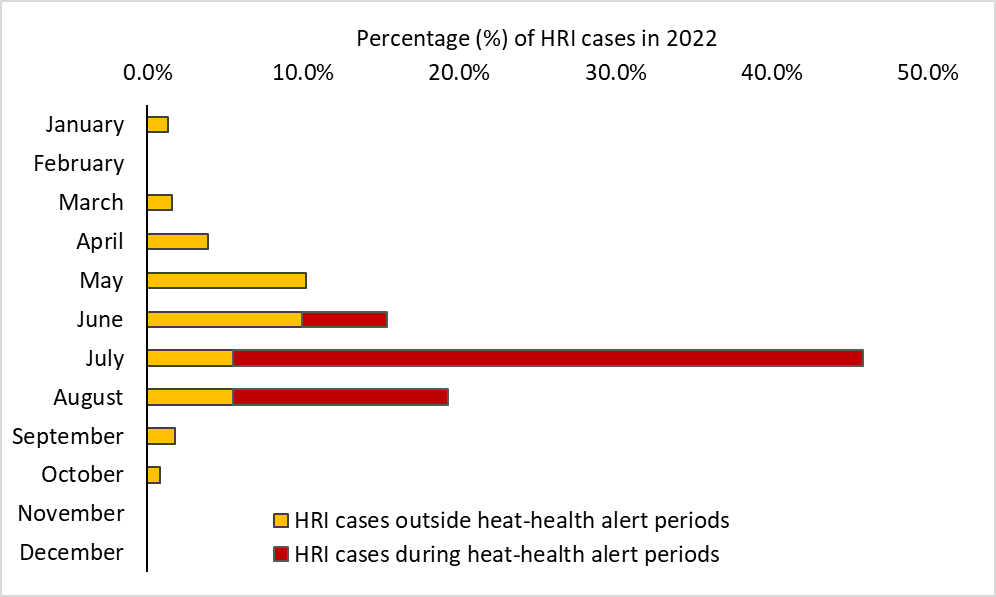
Five times as many dogs presented to Vets Now clinics during the heat-health alert periods, than during the cooler parts of summer.
We are therefore urging all owners to use human heat-health alerts to help prevent HRI in dogs. During heat-health alert periods we recommend avoiding known triggers of HRI as far as practically possible, especially in at risk dogs:
- Exercise
- Exposure to hot indoor and outdoor environments (especially if there is no shade or access to water for cooling)
- Travelling in hot vehicles
- Visiting stressful environments (such as groomers and potentially routine veterinary care visits that could be delayed if the dog gets stressed)
What are the main triggers of HRI in UK dogs?
Overall, of the dogs with at least one trigger in their clinical history 51.5% included mention of exercise. However, 9.5% of cases included multiple possible triggers in the dog’s clinical history; for example the dog had been on a walk, in hot weather, then transported in a hot vehicle to the veterinary practice. Any, or all of those triggers could have contributed to the dog’s condition.
The following diagram illustrates the number of HRI events that included a history of each trigger, with overlapping sections indicating multiple potential triggers:
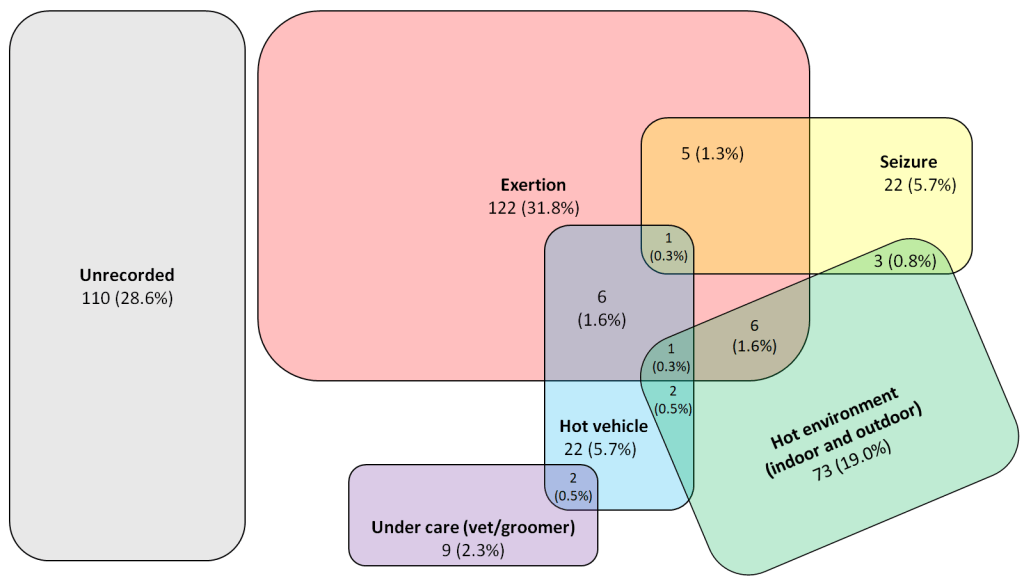
In this dataset, we recognised “seizing” (having a fit) as a type of HRI trigger. When dogs experience a seizure, their muscles contract and spasm which generates heat, therefore the longer the seizure lasts, the more heat generated which can lead to HRI. To complicate matters, moderate-severe HRI can also CAUSE seizures, (in both epileptic dogs and non-epileptic dogs) so it isn’t always possible to tell what came first, the seizure or the HRI. Regardless, any dog experiencing a seizure during hot weather, or seizing for more than 1-2 minutes is at risk of fatal HRI so should receive veterinary care ASAP.
What should you do if your dog overheats?
Over 50% of the dogs presented for veterinary care with severe HRI died. This mirrors the results of our previous study of dogs treated for HRI in primary-care vet practices during 2016-2018. In contrast, 95% of dogs presented with mild-moderate HRI survived. We are therefore urging ALL dog owners to learn how to recognise the MILD signs of HRI, so they can take action as soon as possible to prevent disease progression, and potentially save a life.
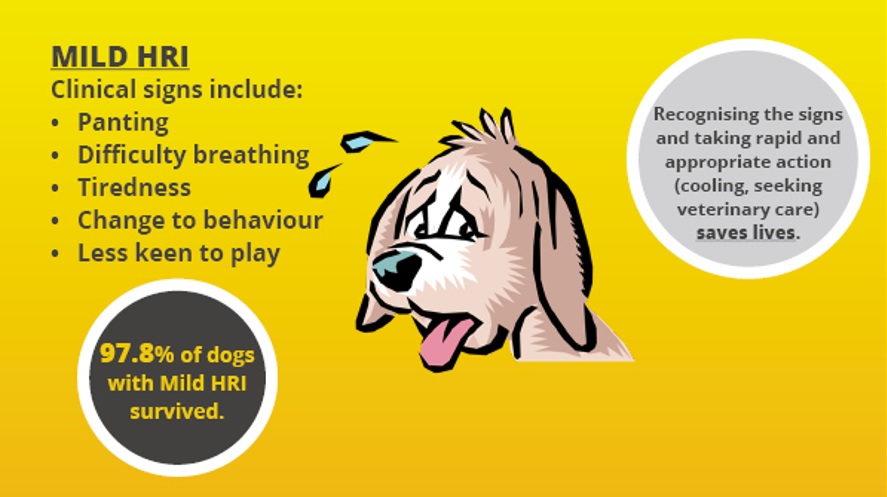
No matter the cause of overheating, the aim should be to prevent further body temperature increase and promote cooling. As soon as a dog has overheated we recommend you:
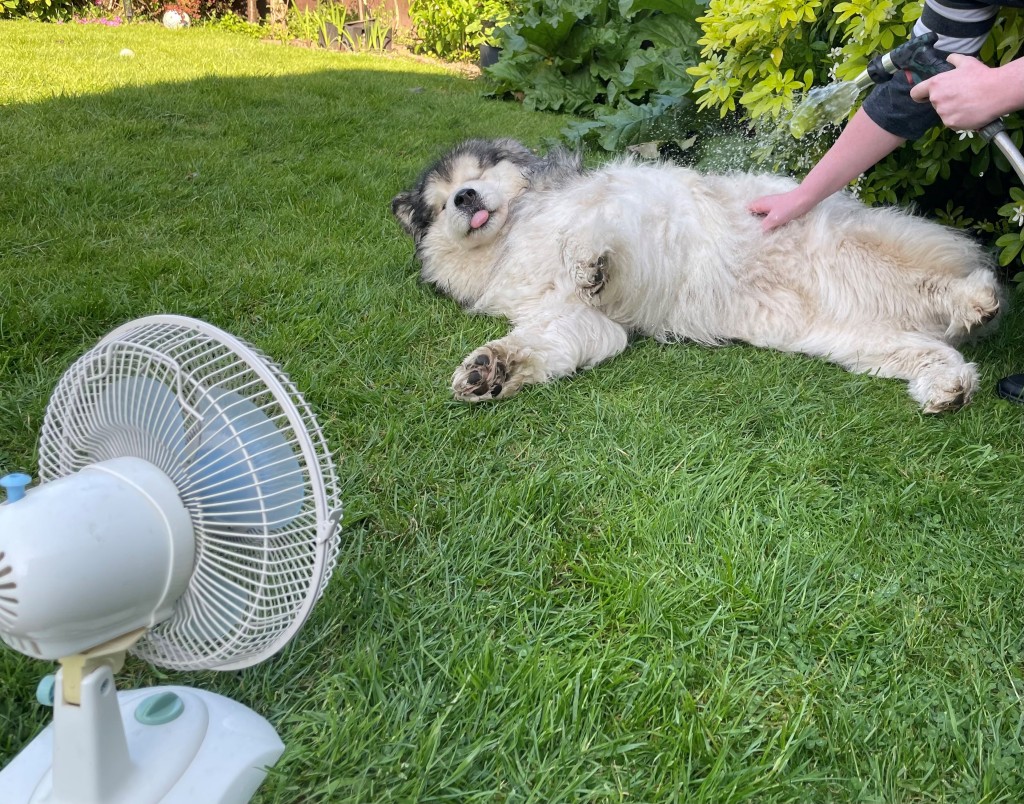
- Move the dog into the shade, ideally to a well ventilated area with air movement from wind/air conditioning/a fan.
- Stop anything that could make the dog hotter, including exercise, stress, play.
- COOL FIRST, TRANSPORT SECOND!
- If the dog needs transporting home/to a veterinary clinic:
- Cool using water. Pour any available water (cooler than the dog) over the dog and ensure air movement. For thick coated breeds focus on the neck, belly, groin and legs. Do NOT pour water near the head.
- Offer small amounts of drinking water, but do not force the dog to drink.
- Cool the vehicle before the dog enters, open windows and “pump” air out (if you open the windows on one side of the vehicle, then open and close the doors on the opposite side this will replace hot air with cooler outside air) or switch on air conditioning.
- Ensure the dog is legally and safely restrained whilst travelling, and ideally maintain air movement over the dog if further cooling is needed.
- If the dog needs transporting home/to a veterinary clinic:
- Call a vet ASAP if there are any concerns the dog’s condition is serious, or may deteriorate.
 Hot Dogs - heatstroke education for dog owners
8 thoughts on “Human heat-health alerts – useful for dogs too!”